Tuesday, 6 October 2015

The Golden Triangle of Art

Madrid is a city absolutely bursting at the seams with history and culture. Some of the world's most famous pieces of art by history's most well known artists are kept here. The three largest and most popular art museums in the capital are said to form "the golden triangle of art". This is in fact a bit of a misnomer as they don't form a triangle exactly but more of a straight line all along the Paseo del Prado. In this post I'll give a quick summary of each museum and let you know which is my favourite (It'll be pretty obvious by the end...)


Heading northwards up the paseo the first museum you come to is the Museo Nacional Centro de Arte Reina Sofia...or the Museo Reina Sofia for short. This impressive building with its shining steel and glass elevators houses a huge collection of artwork that spans the 20th century from 1900 to around 1980.


The focus is on revolt, conflict and rebellion in the art world with many pieces from the surrealist, cubist and abstract movements. Artists such as Dalí and Picasso are well represented with Picasso's famous Guernica painting a must see exhibit. This is my second favourite out of the three "golden triangle" museums. I have to say that modern art often leaves me cold; I'm not quite sure what to make of this black on black piece for example...


But there are plenty of colourful alternatives and some really beautiful examples of work from the turn of the century. I found this museum the most useful in my research for my year abroad project on the avant garde movement of the 1920s. Below is one of my favourite paintings in Madrid; Herman Anglada Camarasa's Sonia de Klamery echada. I love the use of the dark background which makes the woman herself and the jewel-bright bird almost luminous.


Here is Solana's famous painting of the Tertulia at Café Pombo:


At the Reina Sofia entrance is free on Sundays from 1.30pm to 7pm and otherwise costs 8 euros.

Next on our travels up the Paseo del Prado is, surprisingly enough, the Museo del Prado. This is without doubt Spain's most famous art museum and houses the most important collection of Spanish art in the world. Works by Rubens, El Greco and Diego Velázquez are on display alongside others from European artists from the 12th through to the 19th century. Perhaps the most famous painting by Velázquez, "las Meninas", which depicts the Spanish princess and her maids along with a self portrait of the artist is a great tourist attraction.


The collection of artwork held here is immense and you'll need to set aside at least a whole morning or afternoon to begin to take it all in.

The entrance fee is a fat 14 euros but is reduced to 7 euros for concessions. Students go free and there's free entry for all from Monday-Saturday 6-8pm and Sunday 5-7pm.

Everyone raves about the Museo del Prado and it is certainly an impressive collection of art in an impressive setting. For me though it's the third museum in the "golden triangle" that is really everything that an art museum should be. The Museo Thyssen Bornemisza sits at the top of the Paseo del Prado in a beautiful building with a lovely garden in front.


The inside of the building is just as lovely with high ceilings and plenty of natural light. The reason that I love this museum above all the others is the sheer variety of its art collection. To be honest I find the everlasting stream of religous scenes and court paintings in the Prado quite boring... Yes Las Meninas is an enigma but, as my parents noted after a trip to Venice, one can definitely reach saturation point when it comes to pictures of the baby Jesus.

In the Thyssen there's something for everyone. Lovers of modern art won't be disappointed:


Even those who get their kicks from white on white...


People looking for big names in the art world will also be in their element with several incredibly famous paintings dotted about.

Edward Hopper's Hotel Room (1931)


Hans Holbein's Portrait of Henry VIII


Edgar Degas' Swaying Dancer/Dancer in Green (1877-79)


As a historian and a lover of social history I find portraits of real people or events often much more fascinating than any depiction of a religious scene. Below is a selection of my favourite paintings from the Thyssen's collection showcasing the incredible variety of the works under its roof.

Portrait of President George Washington's Cook (1795-1797)


Henri Matisse, Conversation Under Olive Trees (1921)


Portrait of a Man (1475-1476)


From Medieval artworks...


to Georgian and Victorian society portraits...


 and right the way through to pop art...


 the Museo Thyssen Bornemisza has it all. If you visit one museum in the "golden triangle" and you can resist the pull of the Prado then make it this one; you won't be disappointed!

The entry fee is 10 euros and 7 euros for concessions. Free entry for children under 12 and for everyone on Mondays 12-4pm.

If you're familiar with these wonderful museums I'd love to know which one is your favourite. Leave a comment below or tweet me @madridadrift

Saturday, 26 September 2015

The Book-Buying Experience in Spain

All of us who love books are familiar with the book-buying experience in England. In shops such as Foyles or Waterstones the emphasis is on the time to browse, the comfort of the space and in short the pleasure of being surrounded by books. Having worked in a large high street bookshop in Madrid for the last 3 months of my time abroad I can say that, although at first glance it would appear fairly similar to an English shop, the book buying experience is altogether different.


Above is a photo of the ground floor of Casa del Libro; the shop I worked in as an intern bookseller. The interior of the shop, like an English bookshop, is geared towards a good browsing experience; the lighting is warm, there are soft chairs and the books are organised by author's surname to ensure it's easy to find the one you need. But that's where the similarities end.

In England browsing is an artform; I for one can while away a good 2 hours just wandering from shelf to shelf taking down books that catch my eye. The Spanish are much more direct when it comes to books. Once a customer caught sight of an oversized green tabard (such as the one Miguel is modelling in the photo above) they made a beeline for whoever was wearing it to ask for the book they were after to be brought to them. They had no interest in browsing seemingly intent on by-passing it altogether. So unused to browsing were they that many people were unable to find a book by themselves even with signs denoting the shop's sections and shelves.

Maybe it's just the English dislike of talking to strangers but I know that as a matter of pride I would much rather try to find a book for myself and only then ask an attendant if I couldn't find it. Doesn't it also take the pleasure out of being in the shop if you ask someone else to find a book for you? The majority of the customers in Casa del Libro treated book-buying like shopping for any other product they needed. Many had done research on the internet beforehand and came knowing the exact title they wanted, asked for it at the front desk, waited for it to be brought to them and then headed straight for the cash register. Less a pleasurable bookish experience and more a quick trip to argos!

This is of course a generalisation and there were plenty of people who also spent significant amounts of time just enjoying being in the shop and seeing what was on offer. It was interesting to see though that on the whole buying a book in Madrid seems to be a much quicker, more practical task than in England.


One of my favourite bookshops in Madrid, Desperate Literature, attempts to counter this attitude to books. In my mind there's a fine line between creating a space that's too twee or a bit naff and a welcoming, cosy shop. The trouble it seems comes when the books begin to take second place to the pottery workshops/biscuit baking/finger painting etc. Desperate Literature manages to keep the focus firmly on the books while maintaining a varied calendar of popular events for its customers. Run by a couple from France and England respectively; an un-hurried, relaxed browsing experience is their top priority. International customers seem to embrace this wholeheartedly though I have seen a couple of Spanish visitors unsure what to do when offered a cup of tea while browsing...

This just goes to show that the Spanish aren't reluctant to adopt new practices when it comes to books. The idea of the cosy, comfy English/French bookshop is now becoming a fixture on the Spanish scene. Plenty of Spaniards have enjoyed spending time browsing for their books in shops like this for years. Take the Calle de Claudio Moyano bookstalls for instance; many a madrileño's idea of heaven on a sunny morning. What is clear, however, is that the large chain bookstores with their high footfall and impeccable customer service aren't going to slow down anytime soon.

Casa del Libro, Gran Vía, 29. 28013 Madrid

Desperate Literature, Calle Campomanes, 13, 28013 Madrid

Thursday, 10 September 2015

Location, Location, Location - Where to live in Madrid

Choosing a place to live in Madrid on your year abroad can get confusing what with all the different areas of the city on offer. In this post I'm going to list the various central barrios or neighbourhoods and give a short summary of their main characteristics which hopefully will help you choose where to start your flat search!

In my time abroad I lived in 3 different flats in 3 different barrios so have quite a bit of first hand experience. I won't be going into any great detail as to the price of rooms in certain areas as this can vary but I'll give you a heads up as to the most expensive/cheap areas.

Here's a map of central Madrid with the barrios clearly marked:


Puerta del Sol/Gran Vía/Callao
 
This is the very heart of the city; Gran Vía is the Spanish equivalent of Oxford street and is often packed with traffic and people. This is not a quiet neighbourhood though the noise is generally traffic related rather than due to clubs/music. Fantastically well connected all the shops/restaurants/bars/cinemas you could want are within walking distance and being right in the centre it's tricky to get lost. Despite its central location though I wouldn't really recommend living in this barrio; too loud and too busy!
 
Malasaña/Chueca
 
These are famously popular areas for young people/students to find a flat. Madrid's self-proclaimed "alternative" barrios Malasaña and Chueca are not for those who like peace and quiet. Malasaña defiantly holds on to the Movida Madrileña spirit of the 80s and is full of trendy bars and clubs. Brilliant independent shops can be found here and there's quite an arty/alternative vibe. Chueca is the city's gay barrio - but don't let that put you off! Sure there are plenty of gay bars etc but the atmosphere is distinctly inclusive with a pretty chilled vibe in the day time and everyone ready to party the night away! Flats here can vary in price (and quality) quite a bit as they're mainly occupied by students and other young people.
 
Colón/Alonso Martínez
 
This barrio links the more edgy Chueca with the more upmarket Chamberí and Salamanca. This is a great spot to live due to its central location and relaxed atmosphere. There are some lovely squares here with plenty of places to eat and shop. Great transport links are also another plus with a cercanías stop as well as metro. Rooms are generally quite cheap especially around Alonso Martínez. The Glorieta de Bilbao is a huge roundabout where several main streets converge; if you follow Calle Fuencarral downwards you'll be in Malasaña and then Sol in no time.
 
Las Cortes/Letras/Las Huertas/Paseo del Prado
 
These areas have more of a traditional/historic vibe. There are still plenty of restaurants and bars (Madrid's most famous jazz bar Café Central is here) but the atmosphere is calmer than Malasaña/Chueca. Unfortunately, though, their proximity to Retiro Park and the Paseo del Prado with its world famous Prado Museum means that these barrios are some of the most expensive in Madrid. Not many students or young people manage to find accommodation in these areas due to the price.
 
Operá/Palacio Real
 
This is the historic heart of Madrid where many of the oldest and most beautiful buildings are to be found. The royal palace is here surrounded by gorgeous gardens and cafes with terraces to sit out in the sun. The main theatre in Madrid is also here with world class drama and opera being performed throughout the year. Much more relaxed than the noisy Malasaña/Chueca but still very central these areas are only a 10 minute walk away from Sol and the Plaza Mayor. Not many students/young people live in these areas as their proximity to the Palace etc has pushed up the price.
 
La Latina/Austrias
 
A small, traditional barrio La Latina is perfect for eating out. The cobbled streets are full of tapas bars particularly Calle de Cava Baja which is famous for the best tapas in the city. Although still pretty close to more expensive areas like Operá this barrio is a little more affordable. One of the least touristy areas of Madrid, La Latina is a great place to witness true Spanish culture. In the day time this area is peace and quiet personified but in the evening it can get a little more lively especially along the more popular eating-out streets.
 
Puerta de Toledo/Lavapies/El Rastro
 
These areas are a bit further out from the centre but still very easy to get to in as little as 3 stops on the metro. Lavapies is the immigrant area of Madrid which can put people off but it's a great place to live for many reasons. Cheap accommodation, great multicultural food stores/restaurants and an interesting night life. In the daytime these areas are full of families and I often saw an African drumming group jamming away as I walked through. For the majority of my time away I lived in Embajadores, a smaller area within Lavapies, and absolutely loved it. El Rastro, Madrid's most famous flea market, is here which is also lovely to mooch around on a Sunday morning.
 
Moncloa/Arguelles
 
This area isn't actually labelled on the map above but it's the light pink section just to the west and north of Malasaña. Many of the students coming to study at Madrid's universities (eg. universidad complutense) lived here as it has such great transport links to the unis. This barrio has a really relaxed vibe with plenty of fresh air and green space; the Templo de Debod is a must see! It's also really close to Casa de Campo the huge green area to the west of the city which is great for walking/picnics etc.
 
Atocha/Retiro
 
These barrios are the closest to Retiro Park and as such are the greenest in the city. Though the majority of flats here are pretty expensive you can occasionally find a good deal. Having the fantastic park on your doorstep may be something you're willing to pay a little extra for! This is a more family focussed part of the city so if it's great nightlife you're after you might want to look elsewhere (though oddly Madrid's most famous club Teatro Kapital is here). Despite being further out of the city you can still hop on the metro and be in Sol in as little as 20 minutes. Atocha railway station is also useful to have nearby as it's where most trains that will take you to explore the rest of Spain will leave from. I lived here for a few months and although the park was right behind my apartment building the huge Paseo Reina Cristina was right in front. This meant that I couldn't really have the windows open because of the noise given off by 7 lanes of speeding traffic - something to think about.
 
Salamanca
 
Salamanca is without doubt the most expensive barrio in Madrid. Huge, wide streets are lined with luxury shops, restaurants and lounge bars. The people that live here are usually a little older having made a success of their careers and are now able to afford a swankier apartment. Also a very family oriented area of the city there are play grounds and designer kids shops dotted about. I was lucky enough to experience life here during my first month in Madrid living in my homestay and could see why it was so popular. Unfortunately, unless you've got quite a bit of money to spend, the rent on a flat here is likely to be just too much but with so many other great places to live in Madrid that's not anything to be disappointed about! 
 
I hope you've found this post useful; if you have any questions just comment below or tweet me @madridadrift. Once you've an idea of where you want to live check out my post on finding a flat which takes you through the process step by step.
 
Tips
  • I focussed on the centre of Madrid for this post but there are plenty of other areas to choose from that are further out of the city.
  • Have a think about where you're going to spend most of your time. If you only need to be in uni for a few hours a week you might not have to live right next door. In fact one of my friends was studying in another town, Alcalá, and chose to live in Madrid catching the train to uni a few times a week.
  • If, like me, you want somewhere that is quiet at night so as not to lose out on sleep then make sure to check out the area you're thinking of on a Thursday, Friday or Saturday night to see how loud it gets
  • Don't get in a panic choosing between areas. Where you live isn't the be-all-and-end-all; think of your flat as a base from which to explore the rest of the city. Madrid is such a great place to live because although it's big enough to hold all the great shops/restaurants/museums/clubs etc. you could want it's still small enough to walk between them. If you find you end up living in an area that wouldn't really be your first choice it doesn't mean you can't experience the other barrios as they're often only a short walk away!
 
 
* The map of Madrid's barrios above was found on laurenonlocation.com


Saturday, 5 September 2015

Magical Madrid - For the romantics out there...

Madrid is a magical city with many a hidden corner to explore. This post is for those of us who crave a bit of theatricality in our lives; a touch of mystery, a dash of eccentricity, the swish of red velvet and flickering candles or the thrill that only a secret entrance can give. Here I've compiled a list of three out of the many spots I've discovered in Madrid to satisfy that craving...

1. Platea Madrid

This is one of the places I found that really made me happy. An old abandoned theatre restored to its former glory and turned into a swanky bar/restaurant with live music acts and a distinctly classy atmosphere. Accessed from the street via an entrance at the back of a fruit and vegetable shop it's sufficiently secret too...


Another English girl I met on the plane back to Madrid invited me for a drink and this was the place she picked. Making our way past the immaculately presented fruit and veg I was amazed to see the ceiling rise and the floor drop away to encompass an entire theatre! The building covers several floors and many different food stalls and restaurant booths. The tinto de verano I ordered at the bar came in a goldfish bowl sized glass and was accompanied by a free jazz concert on the stage above us. Steeped in old-school glamour, this is definitely a place not to be missed; perfect for when the parents visit or to take a boyfriend or girlfriend out for drinks/dinner.

Platea Madrid, Calle Goya, 5-7 (+34915770025)

 2. Capas Seseña

No self respecting musketeer/highwayman/toreador/witch/nobleman/outlaw is complete without a cape and for me this has to be perhaps the most romantic item of clothing ever invented. Founded in 1901, Capas Seseña is the only shop in the world that only sells capes and only capes made on the premises at that.


From old-fashioned black wool capes lined with silk to the more modern cropped and colourful numbers on the catwalks today this shop has it all. Unless you've got a spare £300 or more burning a hole in your pocket you're unlikely to be able to afford one of these beauties but we can all press our noses against the glass and daydream...

Capas Seseña, Calle de la Cruz 23 (0034 91 531 6840) www.sesena.com

3. El Jardín Secreto

This place isn't exactly secret or hidden, I found it in my lonely planet guidebook, but it's certainly eccentric. One of the most popular bars in Madrid for a drink with friends or a date-night, the interior of this place is truly unique.


Glowing teapots and rainbow hot air balloons hang from the ceiling with tables made out of clocks and chairs made from huge sea turtle shells. An immense giraffe towers over everything in the corner while swathes of exotic flowers and colourful fabrics are draped around the windows. The menu is also pretty unique with fruity, fizzy drinks rubbing shoulders with teas and coffees, gorgeous puddings and a range of tasty main courses. Once you step inside you'll feel like you've fallen down a rabbit hole into a kind of dream land - the perfect place to excape from it all!

El Jardín Secreto, Calle Conde Duque 2, (+34 915 41 80 23)


There are plenty of other magical places in Madrid that bring out the romantic in all of us. If you know of any please comment below - I'd love to hear about them!

* The photo of Platea Madrid was taken from guiadelocio.com

Friday, 28 August 2015

My Year Abroad in Photos

I've been back in England for nearly 2 months now and it's finally hit me what with coursework results, reading lists being released and thoughts of future dissertations that my year abroad is well and truly over...

Skimming through all my hundreds of photos trying to pick my entries for Southampton uni's photo competition it struck me what a truly amazing, life-changing year I've had. I couldn't have been happier with how my year turned out. There were tough times of course, times when I couldn't be bothered with the whole bloody thing, but there were also countless moments when I felt truly happy and proud of myself.

Who knew a year ago that I'd manage to move to another country, find myself a place to live, talk myself into two jobs, take up an instrument, make some truly fantastic friends and travel the length and breadth of Spain all using my second language??! Some of you have been with me through it all, whether via this blog or otherwise, and I want to thank you for helping to make my year abroad in Madrid what it was - absolutely incredible!

The rest of this post is made up of photos of some of the most memorable moments from my time away. Spain is a fantastically varied country with some of the most beautiful buildings, crazy people and gorgeous views I've ever encountered; I hope this comes through in my photos.

My first night - Alone in the dark, peering out of the window at the torrential rain and wondering what on earth was going to happen next...


Getting to know my homestay host Isabel and starting to feel a bit "Spanish"


My first visit to the beautiful Retiro park - One of my favourite places throughout the rest of my time in Madrid


Discovering the Claudio Moyano Bookstalls - Just another little thing that added to the magic of my year away


Running down the escalator to the station platform to meet my boyfriend Chris for the first time since I'd gone away after 7 weeks apart. This photo is actually from a later visit as for those first few days together I forgot all about my camera while we explored the city


Watching the famous Jorge Pardo in Madrid's Cafe Central - From this moment on Jazz really caught my imagination


Moving to my new flat in Embajadores (finally escaping my demon of a flatmate!) and meeting my new year abroad pals.


 Annabel's 21st birthday at Teatro Kapital - A hilarious night of crazy dancing at Madrid's most infamous nightclub


A Trip to Toledo - My first trip out of Madrid, a fairytale castle, and the start of my insatiable need to see more of Spain...


The arrival of spring! - After a cold, dark winter the start of the warm spring days along with the almendro and cerezo flowers made me look forward to the heat of summer for the first time


Being dwarfed by El Acueducto de Segovia - One of the most impressive structures I've seen in Spain


Leaving the museum where I'd worked for the last 6 months and not having a clue what to do next - One of the most stressful times of my year abroad...


Arriving in Granada and seeing that the Spain I'd always dreamed of was real - Women in frills and men on horseback


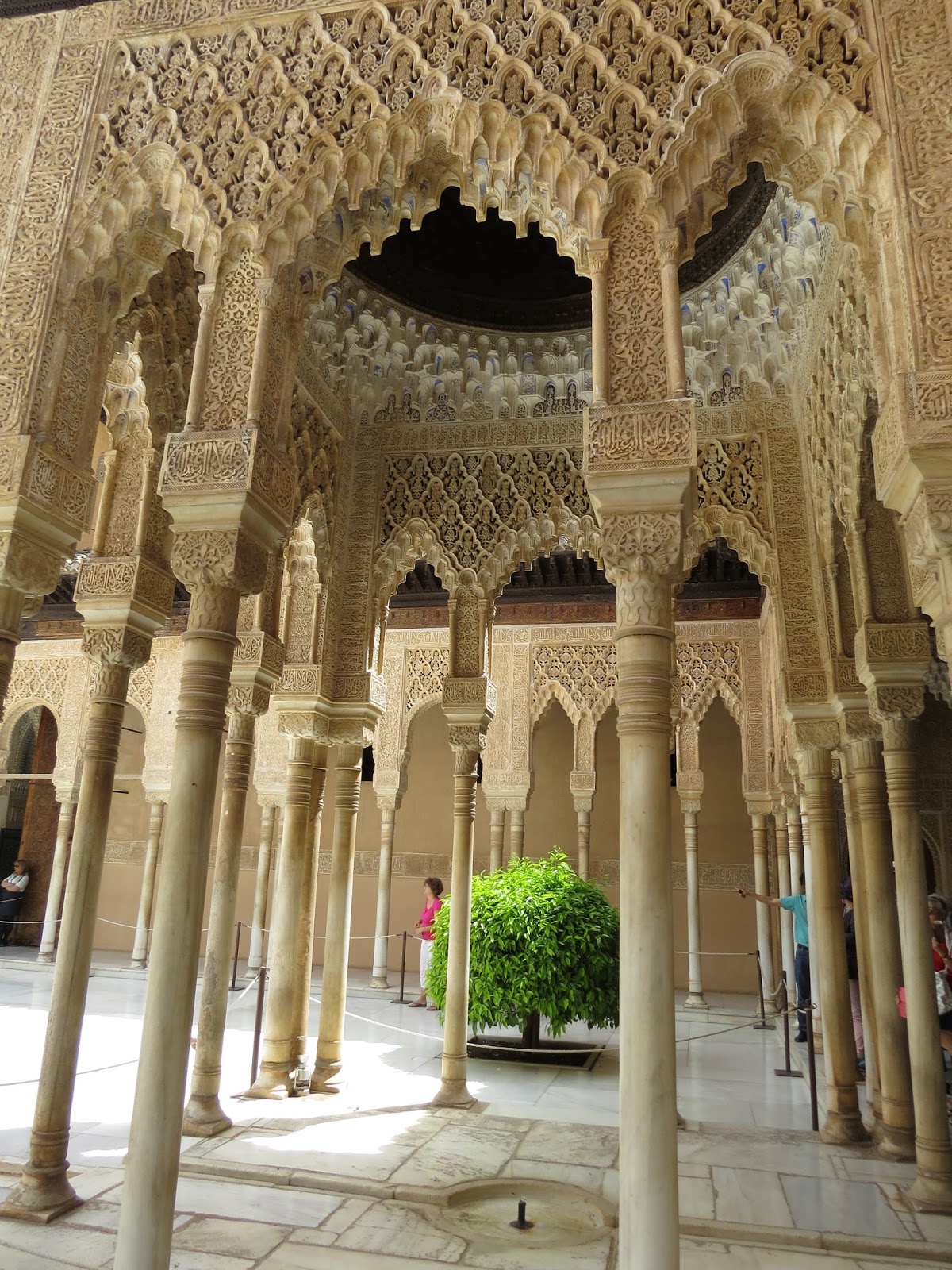
The Alhambra and the arabic quarter being as spell-binding as I'd hoped


Staring in awe at the incredible floral displays of the fiesta de los patios in Córdoba - My favourite Spanish festival  


 Witnessing the legendary beauty of a royal Andalucían garden in May


Standing in Sevilla's Plaza de España at sunset watching the stone turn gold and the fountains flash silver


Starting work at Casa del Libro in Gran Vía - After about a month I had a moment where I felt exactly "right" and happy. Here I was walking out into the sunshine after my shift, heading home to my flatmates, shouting goodbye to my colleagues after spending the morning working on the customer service desk in a shop on the Spanish equivalent of Oxford Street. I would never have believed how far I've come when I arrived in October.


Looking out over the bay in San Sebastián - Great scenery, great food and great company


Lying in the shade in Retiro park for the last meetup of the chicas before we all started to go our separate ways at the end of our time in Spain


Sitting on the rooftop of the Circulo de Bellas Artes, drink in hand, watching the sun set over the Madrid skyline in the last week before I flew home - what a year it has been!


It sounds cheesy but my time away has made me the person I am today; much more confident in myself and ready for another challenge. Madrid has left me with a craving for jamón, a love of Jazz, a horde of new pals and a strong desire to see more of the world. Not to mention a significant improvement in my Spanish. If you're looking forward a little warily to your year abroad or even umming and aahing over whether to set off on one; just go! It'll certainly be the most interesting, challenging, unpredictable and life-changing year you'll have had so far.

To see more of the photos I took of all the wonderful things I saw and did during my year abroad follow me on instagram @madridadrift (find the link at the top right of the page)
Friday, 14 August 2015

Taking Up an Instrument Abroad - My Clarinet Adventure!

In the last month of my second year at uni Evan Christopher, the famous clarinetist from New Orleans, and his band came to play at the Turner Sims concert hall on campus. As an anniversary treat my boyfriend and I went along and it was on that evening that my burning desire to play jazz clarinet came into being! After borrowing a friend's clarinet over the summer to enjoy a lovely birthday present of 4 lessons, I took the plunge and bought a second hand instrument of my own. Nestled in blue velvet my clarinet was then stowed in my suitcase to end up many miles away in Madrid.


The first few weeks of my time away were pretty hectic what with finding my way around the city, starting work and generally adapting to a life lived entirely in Spanish. Soon, though, I was eager to get going with my clarinet and did a quick google search to find my first teacher; Marcos. On a freezing cold November evening I walked the 30 mins from my new flat to Lavapies. This barrio is one of the poorer parts of Madrid and many immigrants have set up home here. During the day it's buzzing with colour and life; mothers play with their children, African drumming groups sit on walls jamming away while saris and sequins hang in shop windows.

At night, however, it's a different story... In the dark it takes on quite a sinister feel and I was glad when Marcos eventually turned up; albeit an hour late. A short, dark-haired young man with an impressive ponytail and a bouncing walk, he led me up the many flights of stairs to the flat his friend had lent him for the evening's lesson. (I hasten to add that I had let a great deal of people know where I was and what time I would be back - I wasn't taking any chances!)

I spent one of the most bohemian evenings of my life in that flat. After clearing the tiny sofa of its debris (magazines, clothes, an ash tray etc.) we began the lesson. It was news to me that the Spanish have different names for the musical notes than we do. Instead of A B C etc I was suddenly dealing with la, si, do, re, mi, fa and sol. After a long rambling speech about how the world of Jazz was a paradise that I had to get to by breaking down a huge metaphorical stone wall Marcos asked me to improvise for him. Improvise?? I tooted a few notes and saw him wince. He then asked if I minded if he smoked and we spent more or less the rest of the evening looking out over the rooftops and discussing how beautiful the moon was, how cats were the cleverest pets and the secrets of Madrid's incredible music scene. After explaining that this first lesson was free, he let me out into the icey night and I hurried home to my nice warm bed.


Unsurprisingly I didn't organise a second lesson... I wanted something a little more structured, something that involved actually playing the clarinet rather than sitting about smoking moodily and rhapsodising endlessly about jazz. My next teacher, Ricardo (pictured above with me), was just right. Luckily he only lived a couple of streets away and from my first lesson with him I felt like I was really learning something. Having worked as a music teacher in England for many years he was able to conduct our lessons in Spanish but use the English names for the notes. We started out playing pieces from my beginner's book and then later on he gave me the sheet music for a tango and easy blues piece. He was always very patient and understanding, even when I'd forgotten to practice...  and I began to really look forward to my hour's lesson every week. Having something regular in my diary helped me keep track of my time abroad and meant that if I'd had a bit of a rubbish morning Spanish-wise I knew that I'd have a good opportunity for conversation practice later. Ricardo was always jetting off to Berlin or London at the weekends to play in concert so we had plenty to chat about and I learnt lots of new musical vocabulary.


After having a lesson a week for around 6 months, minus holidays etc, I feel like I'm really making progress with my clarinet. Going from nothing to being able to play more or less any piece in my book (after a bit of practice) is a great feeling and having done it in Spanish only makes me feel more proud of myself.You're unlikely to ever have more free time to take up new hobbies or learn something new than while on your year abroad - take advantage of the time while you can!

Top Tips For Learning an Instrument Abroad

  • Finding a teacher is obviously easier in a big city but don't despair if you're in a smaller town. Search online, on notice boards at uni or in local social centres and ask around - you may just strike gold.
  • The teacher you have is of course the most important thing when learning something new. It's up to you what kind of teaching you favour but make sure to be safe. Whether you're taking lessons from a friend at uni or have found a teacher online make sure people know where you are and what time you'll be back.
  • If you don't already have your own instrument then check out your uni's music department or local music shop. Often they have instruments available for rent.
  • Prepare! Once you know what kind of instrument you want to learn it's a good idea to memorise some of the vocab you'll be using in French/Spanish etc. It just makes everything easier later on.
  • Have a think about what kind of music you want to play. This is one of the first questions a new teacher is likely to ask you and it's so much easier for them if you say you like blues or country, for example, rather than just shrugging and saying "oh anything...". You're also more likely to enjoy practicing your new instrument if you're playing music you love.
  • Have fun! Don't make this another thing to worry about while you're away. There's absolutely no pressure to continue with lessons if you're not enjoying yourself. Maybe take a break, find a different teacher or just grudgingly accept that this instrument isn't for you.

Happy Playing!

For those interested in Clarinet or Saxophone lessons in Madrid here are Ricardo's email address and website: fricard89@hotmail.com, http://www.ricardotejero.com/.

Tuesday, 4 August 2015

Combined Honours - Keeping Up Your Second Subject Abroad

As a combined honours student I knew right from the start that my third year would be spent abroad and that most of my energy during that time would be devoted to improving my Spanish. I was determined to fully embrace my new life in Spain but, with the prospect of a history dissertation looming on my return, wasn't prepared to just leave my other subject behind. Here's how I managed to keep up my history after I hopped on a plane and flew away to start my new life in sunny Madrid:


 1. Destination - I picked Madrid as my year abroad destination for many reasons; the ease of finding a job and the excitement of living in a capital city among them. Don't let the bright lights and shiny shop fronts of Gran Vía fool you though; Madrid has seen more than its fair share of history. The city is full of monuments to past kings and the battles of long ago - a walk around Retiro park or up through the old/royal quarter is a history lesson in itself. Being the capital also meant that most of Spain's national museums and art galleries were there ready to be plundered on a baking hot summer's afternoon. The bigger the city often the easier it will be to find resources to keep up your other subject.

2. Travel - If you've been placed in a rather out of the way location with British Council or simply couldn't find a job in a capital city - don't despair! A train ride into Paris or Berlin for a day spent sightseeing often isn't an impossibility. Who's to say that history is confined to a country's capital anyway? I was lucky enough to visit the south of Spain and journey through Granada, Córdoba and Sevilla - all places linked to momentous moments in Spanish history. Look at your home city as a base from which to explore the rest of your new country and everything it has to offer in terms of your other subject.

3. Work - I chose to take a break from studying on my year abroad and worked as an intern in a museum and then a leading high street bookshop. I know it's difficult, and you may have to work unpaid as I did, but if you know you don't want to study or teach then it's a good idea to try and get a job/placement linked to your other subject. Whether you study politics, english, film or archaeology there may be an embassy, bookshop, production company or museum out there eager to take you on. You'll never know unless you ask!

4. Study - Although I chose to work in Madrid we all know that a year abroad isn't totally devoid of studying. Most universities set tasks to keep us busy and cement our improving language skills. In my case this took the form of a 6000 word Year Abroad Project to be handed in in May. With free reign when it came to a topic for the essay I decided to tie in the history side of my degree. The resulting project on the Spanish café culture of the 1920s and its links to the avant garde movement had me writing a full length academic essay on a historical topic...in SPANISH. Something that definitely brushed away the cobwebs and required me to utilise all my old history research and analysis skills. If you can, definitely try and tie in your other subject to any work your university sets you while away.

5. Mix it up - Being combined honours students we're used to multi-tasking and bringing various different skills out of the bag at a moment's notice. The year abroad is the perfect setting to make the most of what the first two years of your degree have taught you. Why not subscribe to a philosophy journal in French? Join a historical re-enactment group in Germany, set yourself a goal to read the classics in Spanish or get up to date with politics on Italian TV? Whatever you do to keep up your other subject there's no better feeling than successfully combining your two skill sets, after all, as a combined honours student, it's what you do best.

(This article has just been published on thirdyearabroad.com to see the article on the website click here: http://www.thirdyearabroad.com/home/item/2656-combined-honours-keeping-up-your-second-subject-abroad.html)